Soil Information For Mounds View, MN Gardens
Most residential yards in Mounds View contain sandy soils formed from glacial outwash deposits. These soils drain quickly and warm up early in the spring.
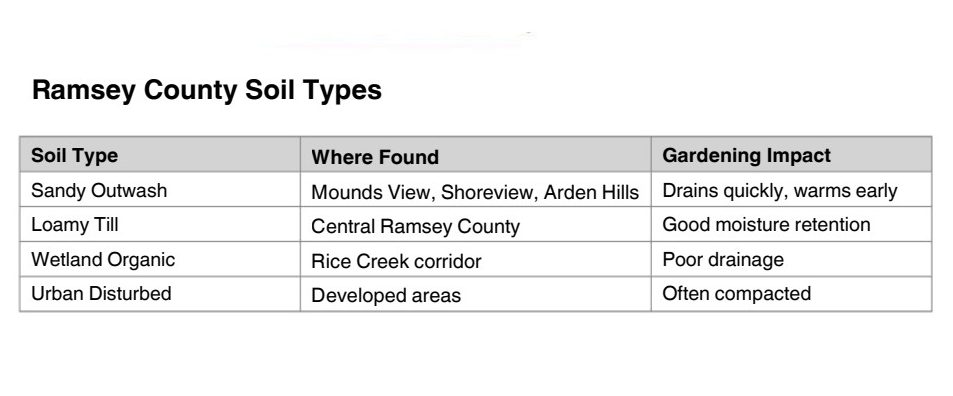
Common soil series in Mounds View:
- Anoka sand
- Zimmerman sand
- Sartell sand
Improving Sandy Soil
- Add compost every year (2–3 inches mixed into top 6–8 inches).
- Mulch heavily using shredded leaves, straw, or wood chips.
- Grow cover crops such as oats, peas, buckwheat, or clover.
- Add carbon-rich materials like leaf mold, aged manure, or biochar.
- Reduce tillage by using permanent beds or broadforking.
Backyard Soil Testing Guide
Testing soil helps gardeners understand nutrient levels, soil pH, and organic matter content. Minnesota gardeners are encouraged to use the University of Minnesota Soil Testing Laboratory because recommendations are calibrated for Minnesota soils and climate. This costs a fee, and more information can be found here. However, you can also test your soil at home with a home testing kit, or simply by observing it, as described below.
Quick Soil Texture Test:
- Falls apart immediately → Sandy soil
- Forms a soft ball → Loam
- Sticky ribbon forms → Clay
Drainage Test:
Dig a hole 12 inches deep, fill with water, and measure drainage.
- Less than 1 hour → Very sandy
- 2–4 hours → Ideal drainage
- 8+ hours → Poor drainage